
Silent ‘E’ Words List: The Complete Guide to English’s Most Misunderstood Letter
There is a particular kind of magic that happens at the end of an English word — a letter that makes no sound of its own yet reaches backward across a consonant to transform everything that came before it. Drop an “e” onto the end of “hop,” and you get “hope.” The vowel changes its voice entirely. The word changes its meaning entirely. And the “e” itself? It says nothing at all.
This is the silent “e” — sometimes called “magic e,” sometimes “bossy e,” and in British and Australian classrooms, the “split digraph.” Whatever name you use, it is one of the most powerful and most frequently misunderstood patterns in English spelling. Teachers rely on it to unlock reading fluency in five-year-olds. Writers lean on it, often without realizing, every time they choose between “past” and “paste,” “mad” and “made,” “cut” and “cute.” And yet, despite how central it is to English orthography, most explanations of the silent “e” stop at a single, oversimplified rule — one vowel, one consonant, one final “e,” and the vowel “says its name.” That rule is a useful starting point. It is also, as any careful reader of English quickly discovers, only part of the story.
This guide goes further. Below, you will find not just a word list, but a genuine grammatical and etymological account of what the silent “e” actually does — its several distinct jobs, the patterns it follows, the exceptions that break those patterns, and a comprehensive, categorized word list organized by vowel sound, word length, and function. Whether you are a parent helping a child sound out “cake” for the first time, a teacher building a phonics curriculum, an ESL learner puzzling over why “give” doesn’t rhyme with “hive,” or simply a lover of language curious about the mechanics beneath the words you use every day, this article is built to be the single resource you need.
What Is a Silent ‘E’? A Working Definition
A silent “e” is a final “e” at the end of a word that is not pronounced aloud but that changes the sound, spelling, or grammatical function of the word it belongs to. It is “silent” only in the narrow sense that it contributes no sound of its own to the word’s pronunciation. In every other sense, it is one of the most active letters in English spelling — doing more grammatical and phonetic work per appearance than almost any other single character in the alphabet.
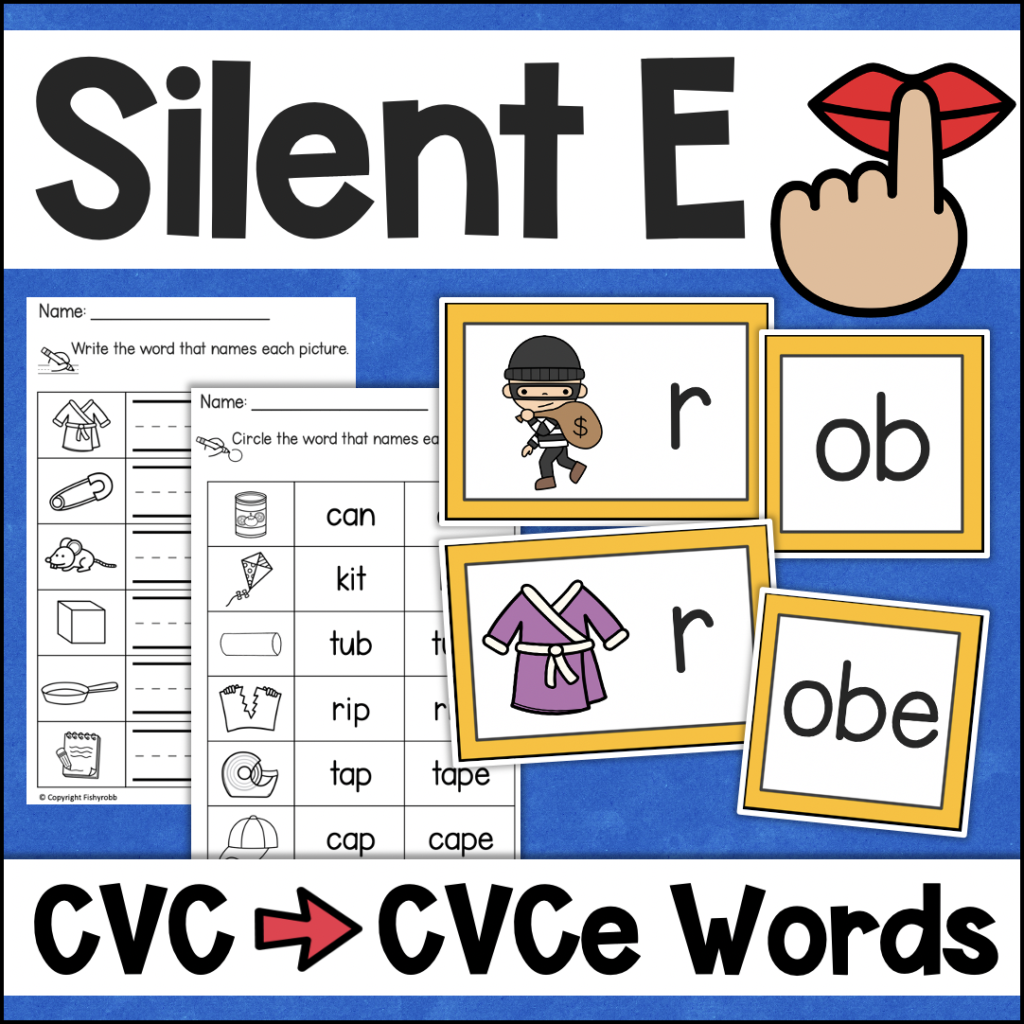
Consider the word “cap.” Say it aloud. The vowel is short and clipped — the sound linguists write as /æ/. Now add a silent “e”: “cape.” The vowel is no longer short; it has become the long diphthong /eɪ/, the sound of the letter “a” itself. The “p” hasn’t changed. The “c” hasn’t changed. Only the addition of that final, unvoiced “e” has reached back over the consonant and altered the vowel’s identity. This is the phenomenon that gives the pattern its most common classroom nickname: magic e.
But — and this is the point most simplified explanations miss — making the preceding vowel “long” is only one of several jobs the silent “e” performs. Understanding all of them is what separates a superficial grasp of the rule from a genuinely useful one.
The Vowel-Consonant-E (VCe) Pattern, Explained
Linguists and reading specialists refer to the classic silent “e” structure as the VCe pattern: Vowel, Consonant, silent E. It’s also sometimes called CVCe, when you include the initial consonant that typically opens the syllable (Consonant-Vowel-Consonant-e), as in “cake,” “bike,” or “rope.”
The mechanism is consistent: a single vowel is followed by a single consonant, which is followed by a final, silent “e.” That single consonant is the hinge on which the whole pattern turns. When there is only one consonant standing between the vowel and the final “e,” the vowel typically shifts from short to long. Compare these pairs:
- cap → cape
- kit → kite
- rob → robe
- cub → cube
- pet → Pete
In each case, removing the “e” collapses the word back into a short-vowel CVC (consonant-vowel-consonant) word. Adding it back stretches the vowel into its long form — the sound where the vowel essentially says its own name. This is why teachers so often phrase the rule as “silent e makes the vowel say its name.”
It’s worth noting why the pattern requires exactly one consonant between the vowel and the “e.” If there are two consonants — as in “cats” or “bells” — the vowel remains short even with an “e” tacked on later, because English syllable structure treats double consonants differently. This is why “hopping” (with two p’s) keeps the short vowel of “hop,” while “hoping” (with one p) carries the long vowel of “hope.” That doubled consonant is doing the opposite job of the silent “e” — it’s a signal to keep the vowel short, not stretch it long.
Beyond “Long Vowels”: The Other Jobs of Silent E
If you only ever hear about the vowel-lengthening function, you’ll be blindsided by hundreds of common English words. The truth is that silent “e” performs at least five distinct jobs in English spelling, and a genuinely literate understanding of the pattern requires knowing all of them.
Job One: Lengthening the Preceding Vowel
This is the classic function described above — turning “not” into “note,” “slid” into “slide,” “cut” into “cute.” It’s the version taught first in phonics instruction because it is the most common and most productive pattern, and it’s the one most people mean when they say “silent e” or “magic e.”
Job Two: Softening a Preceding ‘C’ or ‘G’
In English, the letters “c” and “g” each have two possible sounds: a “hard” sound (as in “cat” and “go”) and a “soft” sound (as in “cent” and “gem”). A final silent “e” is one of the signals that tells a reader to use the soft sound. Compare:
- rag (hard g) → rage (soft g, sounds like “j”)
- fac is not a word, but face (soft c, sounds like “s”)
- danc is incomplete without the e: dance (soft c)
- hug (hard g) has no silent-e counterpart that softens it the same way, but huge demonstrates the same softening principle with the “g” before “e”
This is why words like “notice,” “chance,” “orange,” and “college” end in “ce” or “ge” — the silent “e” isn’t there to lengthen a vowel in these cases at all. It’s there to keep the preceding consonant soft. Try removing the “e” from “notice” and sounding out “notic” — the “c” would default to a hard /k/ sound without it.
Job Three: Preventing a Word from Ending in ‘V’ or ‘U’
This is one of the quirkier but more consistent rules in English orthography: standard English words are not permitted to end in a bare “v” or “u.” Whenever a word would naturally end in one of these letters, English tacks on a silent “e” purely as an orthographic convention — not to change pronunciation, but to satisfy a spelling constraint. This explains an enormous number of otherwise-puzzling words:
- have, give, live, love, glove, above, move, prove, serve, solve
- due, cue, blue, true, glue, argue, continue
Notice that in words like “have” and “give,” the vowel does not go long. This trips up countless learners who expect “have” to rhyme with “cave” or “give” to rhyme with “hive.” It doesn’t, and it won’t, because the “e” in these words isn’t performing Job One at all — it’s performing Job Three. Once you know this, the exception stops looking like chaos and starts looking like a rule of its own.
Job Four: Marking a Complete Syllable in Consonant + LE Words
In words like “table,” “apple,” “little,” “candle,” and “purple,” the final “e” doesn’t affect a preceding vowel sound at all — instead, it completes what’s called a consonant-le syllable, where the “le” forms its own syllable with a soft, almost vowel-like “l” sound (technically a syllabic consonant). English spelling rules require this kind of ending syllable to be written with a final “e” even though that “e” is not lengthening anything nearby. This pattern is distinct enough that many phonics programs teach it as its own unit, separate from classic VCe words.
Job Five: Distinguishing Homophones and Preventing Plural Confusion
Occasionally, a silent “e” exists purely to visually distinguish one word from another that would otherwise look identical, or to prevent a word from appearing to be a plural noun or a third-person verb form when it isn’t. Words like “please” (versus “pleas”), “prize” (distinguishing it from potential confusion with “priz”), and “horse” (which would otherwise resemble a plural of “hor”) fall into this category. This job is less commonly taught but explains some otherwise-mysterious spellings.
Silent E Exceptions: When the Rule Breaks Down
No English spelling pattern is airtight, and silent “e” has one of the most famous sets of exceptions in the entire language. These exception words are frequently taught as “heart words” or sight words — words that must be learned by memory because their pronunciation doesn’t follow the decodable pattern a reader would otherwise expect.
The most common exception words include:
- have, give, live (as a verb), love, glove, above, shove, dove, done, none, some, come, one, gone, where, there, were, are
Why do these words break the rule? Reading specialists generally point to two explanations. First, as discussed above, many of them (have, give, live, love, glove, above, shove) end in “e” purely to satisfy the no-final-v spelling convention, not to lengthen the vowel — so they were never really “breaking” the lengthening rule in the first place; they’re following a different rule entirely. Second, words like “come,” “some,” “done,” “gone,” and “one” are genuine historical exceptions: their pronunciations shifted over centuries of spoken English while their spellings stayed frozen in an older form. English spelling, unlike its pronunciation, is remarkably conservative — it tends to preserve how a word used to sound long after speech has moved on.
This is a useful thing to understand, because it reframes “exceptions” from being random noise into being small, explainable pockets of pattern. Once a reader knows that “have” ends in “e” to avoid ending in “v,” and that “come” reflects a pronunciation shift rather than a spelling error, these words stop feeling like arbitrary hurdles and start feeling like evidence of English’s long, layered history.
The Complete Silent E Word List, Organized by Vowel Sound
Below is a comprehensive, categorized list of silent “e” words, organized first by which long vowel sound the silent “e” produces, then roughly by word length. Use this section as a working reference for teaching, spelling practice, or simply satisfying curiosity about how deep this pattern runs.
Long ‘A’ Words with Silent E
Three and four letters: ace, age, ale, ape, are*, ate, awe, axe, bake, cake, came, cane, cape, care, case, cave, date, face, fade, fake, fame, fare, gate, gave, gaze, hale, hate, have*, jade, lace, lake, lame, lane, late, made, make, male, mane, mate, maze, name, pace, page, pale, pane, race, rage, rake, rate, rave, safe, sake, sale, same, save, tale, tame, tape, wade, wage, wake, wane, wave
Five letters and beyond: abase, adore, blade, blame, blare, brace, brave, chase, crane, crate, drape, flake, flame, frame, gauge, glare, grace, grade, grape, grate, grave, place, plane, plate, quake, scale, scare, shade, shake, shale, shame, shape, share, skate, slate, snake, space, spade, spare, stage, stake, stale, stare, state, trace, trade, whale, adjacent, cascade, escape, migrate, persuade, translate
(Words marked with an asterisk are exception words, discussed above — included here for completeness of the “ends in silent e after this vowel” pattern.)
Long ‘I’ Words with Silent E
Three and four letters: bike, bite, dice, dime, dine, dive, file, fine, fire, five, hide, hike, hive, ice (two-letter root), kite, life, like, lime, line, mice, mile, mine, nice, nine, pile, pine, pipe, ride, ripe, rice, rise, side, site, size, tide, tile, time, vine, wide, wife, wine, wipe, wire, wise
Five letters and beyond: bride, bribe, chime, chive, crime, drive, gripe, grime, knife, pride, prize, shine, shrine, slide, slime, smile, spike, spine, spite, stride, strike, strive, swine, thrice, thrive, twice, twine, white, write, decide, define, delight (with vowel team, related pattern), despite, divide, invite, provide, reside, revise, surprise
Long ‘O’ Words with Silent E
Three and four letters: bone, code, cone, cope, cove, dome, dose, dote, doze, gone*, hole, hope, hose, joke, lobe, lode, lone, mode, mole, mope, nose, note, pole, pope, pose, poke, rode, role, rope, rose, rote, tone, vote, woke, yoke, zone
Five letters and beyond: abode, alone, choke, chose, chore, clone, close, crone, drone, drove, globe, grope, grove, prone, prose, quote, scope, scone, shone, smoke, spoke, stole, stone, stove, stroke, strode, throne, tadpole, telescope, cajole, provoke, devote, disclose, explode, suppose, unwoke
Long ‘U’ Words with Silent E
Three and four letters: cube, cure, cute, dude, duke, dune, dupe, fume, fuse, huge, lute, mute, mule, rude, rule, tube, tune, use
Five letters and beyond: amuse, brute, chute, crude, flute, flume, fluke, fuse (repeated for clarity), plume, prude, prune, refuse, salute, argue, blue, clue, cue, due, glue, hue, sue, true, value, virtue, continue, pursue
Long ‘E’ Words with Silent E (Less Common)
The silent “e” pattern is rarer for producing a long “e” sound directly, since English typically uses vowel teams (ee, ea) for that sound instead. Still, several notable words follow a related pattern:
- eve, here, mere, cede, scene, theme, extreme, complete, concrete, athlete, compete, delete, discrete, obsolete, precede, recede, secrete, supreme
Words Ending in Silent E That Don’t Fit the Classic VCe Pattern
Not every silent “e” word ends in a single vowel-consonant-e sequence. Many common words end in a silent “e” for other structural reasons — often because English words are conventionally not allowed to end in certain letters (i, u, v, j) in their bare form. These fall largely under Job Three and Job Five above.
Two and three-letter roots with silent e: awe, bye, cue, die, doe, dye, eke, eye, ewe, foe, hoe, ice, lie, lye, owe, pie, roe, rye, sue, toe, woe
Consonant + LE words (Job Four pattern): able, apple, angle, battle, bottle, bubble, bundle, cable, candle, cattle, circle, couple, cradle, cripple, cuddle, dabble, eagle, fable, fiddle, gentle, giggle, handle, humble, jungle, kettle, little, marble, maple, middle, needle, noble, paddle, people, pickle, puddle, purple, puzzle, rifle, ripple, rumble, saddle, sample, settle, shuffle, simple, single, stable, staple, struggle, table, temple, thistle, tickle, title, toggle, tremble, trouble, tumble, turtle, uncle, wiggle, wrinkle
Words that avoid ending in ‘v’: have, give, live, love, glove, above, shove, dove, drive*, five*, hive*, prove, move, remove, improve, approve, serve, curve, nerve, carve, starve, solve, involve, resolve, dissolve
(Note: drive, five, and hive follow the standard long-vowel pattern; they’re listed here only to show the contrast with have, give, and love, which do not.)
Words that avoid ending in ‘u’: due, cue, blue, clue, glue, hue, sue, true, argue, continue, rescue, statue, value, venue
Multisyllabic and Advanced Silent E Words
As readers progress beyond single-syllable phonics practice, the silent “e” pattern reappears constantly in longer, more sophisticated vocabulary — often in the final syllable of academic and Latinate words. This is where the pattern becomes genuinely useful for building advanced spelling and vocabulary skills, not just early literacy.
Academic and advanced vocabulary with silent e: absolute, accurate, adequate, alternate, appropriate, calculate, celebrate, communicate, compete, complete, concentrate, consume, contribute, cooperate, coordinate, create, decorate, dedicate, demonstrate, designate, deteriorate, dominate, educate, elaborate, elevate, eliminate, emphasize, estimate, evaluate, evolve, exercise, expensive, extreme, fascinate, fortunate, generate, graduate, hesitate, illustrate, imagine, immediate, indicate, initiate, innovate, integrate, intense, intricate, irritate, isolate, legislate, liberate, locate, migrate, motivate, narrate, negotiate, obligate, operate, opposite, participate, penetrate, precise, prepare, private, produce, promote, pronounce, propose, reduce, regulate, relate, reserve, respective, response, revise, sensitive, separate, similarrelate, situate, sophisticate, stimulate, suppose, terminate, tolerate, translate, unite, universe, urgent, vaccinate, vibrate, violate
Silent E and Suffixes: The “Drop the E” Rule
Understanding silent “e” isn’t complete without understanding what happens when you add a suffix to a silent-e word — because the “e” doesn’t always survive the transition. This companion rule, sometimes called the “drop the silent e” rule, governs an enormous share of English spelling decisions.
The rule: When adding a suffix that begins with a vowel (such as -ing, -ed, -er, -est, -able, -ous), drop the silent “e” before attaching the suffix.
- hope + ing → hoping (not “hopeing”)
- bake + er → baker
- brave + est → bravest
- fame + ous → famous
- desire + able → desirable
The counter-rule: When adding a suffix that begins with a consonant (such as -ly, -ment, -ful, -ness, -less), keep the silent “e.”
- hope + ful → hopeful
- care + less → careless
- like + ly → but note the exception: this actually becomes likely (the e is retained because dropping it would create an awkward double-consonant collision — a reminder that even secondary rules have their own edge cases)
- state + ment → statement
- polite + ness → politeness
There is one further wrinkle worth flagging for careful spellers: words ending in “ce” or “ge” (where the silent “e” is doing Job Two — softening the consonant) often keep their “e” even before a vowel suffix, specifically to preserve that soft sound. This is why “notice” becomes “noticeable” rather than “noticable,” and “change” becomes “changeable” rather than “changable.” Here, the “e” survives not because the suffix begins with a consonant, but because removing it would cause the “c” or “g” to revert to its hard sound and mispronounce the word entirely. This is a small but telling example of how the five “jobs” of silent “e” interact with — and sometimes override — the general suffixing rules.
Why the Silent E Matters: A Literacy and Linguistic Perspective
It’s worth stepping back from the mechanics for a moment to appreciate what the silent “e” actually represents in the architecture of English. Unlike languages with fully phonetic spelling systems, English spelling is a palimpsest — a document written, erased, and rewritten many times over by Old English scribes, Norman French conquerors, Latin-educated printers, and centuries of sound changes that were never fully reflected in the written form. The silent “e” is one of the clearest fossils of this history still visible on the surface of the language.
Many silent final “e’s” in modern English are direct descendants of Middle English vowel endings that were once fully pronounced. In Middle English, a word like “name” was pronounced closer to “NAH-muh,” with the final “e” voiced as its own syllable. As English underwent a massive sound shift between the 1400s and 1700s — known to linguists as the Great Vowel Shift — those final vowels stopped being pronounced, but the spelling never caught up. The letter stayed on the page long after it disappeared from the mouth, and in the process, it took on an entirely new job: signaling, silently, that the vowel earlier in the word should be pronounced long. What was once a spoken syllable became a written instruction.
This is why the silent “e” rewards careful attention rather than rote memorization alone. It isn’t an arbitrary decoration; it’s a compressed record of sound change, doing quiet grammatical work in nearly every paragraph of English prose. For a reading learner, mastering it unlocks an enormous swath of the language’s vocabulary — because once a reader internalizes the VCe pattern and its exceptions, thousands of words that would otherwise need to be memorized individually become instantly decodable.
Teaching Tips: How to Use This Word List Effectively
For educators, tutors, and parents working with early readers, a word list is most useful when it’s paired with a clear instructional sequence. A few practical suggestions:
Start with minimal pairs. Before introducing a long list, show a learner short-vowel and long-vowel pairs side by side — “cap/cape,” “kit/kite,” “not/note,” “cut/cute” — so the transformation is visually and audibly obvious before it’s abstracted into a rule.
Sort by vowel, not by difficulty. Organizing practice by vowel sound (as this list does) helps learners build a mental category for each long-vowel pattern, rather than treating every silent-e word as a brand-new puzzle.
Introduce exceptions deliberately, not accidentally. Rather than letting a child stumble onto “have” or “come” mid-sentence and lose confidence, introduce the small, closed set of exception words explicitly, and explain — even briefly — why they don’t follow the pattern (ending-in-v avoidance, or historical sound shift). This turns a moment of confusion into a moment of insight.
Layer in the suffix rule once VCe is solid. Don’t introduce “drop the e” alongside the base rule; wait until the core pattern is automatic, then build the suffixing rule on top of it as a natural extension.
Use multisyllabic words to bridge to advanced reading. Once a learner has mastered single-syllable silent-e words, moving into words like “compete,” “locate,” and “communicate” demonstrates that this isn’t just a beginner’s rule — it’s a pattern that scales all the way up through academic vocabulary.
Frequently Asked Questions About Silent E Words
Is silent e the same as “magic e” or “bossy e”? Yes. These are simply different classroom names for the same phonics pattern — a final “e” that is not pronounced but that changes the sound or spelling of the word. “Magic e” and “bossy e” are the terms most common in American classrooms; “split digraph” is the equivalent term used in the UK and Australia.
Does silent e always make the vowel long? No. This is the single most important nuance missed in oversimplified explanations. Silent “e” also softens preceding “c” and “g” sounds, prevents words from ending in “v” or “u,” completes consonant-le syllables, and occasionally exists purely to distinguish homophones. A genuine minority of silent-e words — including very common ones like “have,” “give,” and “love” — do not lengthen the vowel at all.
What are the most common silent e exception words? The words most frequently flagged as exceptions include have, give, live, love, glove, above, shove, come, some, done, none, gone, one, are, and were. Most of these exist to prevent a word from ending in a bare “v,” while a smaller set (come, some, done, gone, one) reflect historical pronunciation shifts.
At what age or grade level should silent e be taught? Most literacy programs introduce the silent “e” pattern in late kindergarten or early first grade, once a learner has a secure grasp of short-vowel CVC words like “cat,” “pet,” and “sit.” Consonant-le words and academic multisyllabic silent-e words are typically introduced progressively through second and third grade.
How is silent e different from other silent letters, like the “k” in “knife” or the “b” in “lamb”? Most silent letters in English are purely historical leftovers with no active grammatical function in modern spelling — the silent “k” in “knife,” for instance, doesn’t change how any other letter in the word is pronounced. Silent “e,” by contrast, is functionally active: it directly changes the pronunciation of the vowel before it (or the consonant before that), even though it produces no sound itself. This is what makes it a genuine spelling rule rather than simply a historical artifact.
Bringing It All Together
The silent “e” is a small letter with an outsized job description. It lengthens vowels, softens consonants, completes syllables, satisfies orthographic conventions, and occasionally exists simply to keep one word from being confused with another — all while making no sound of its own. It is, in miniature, a perfect example of what makes English spelling both frustrating and fascinating: a system layered with centuries of sound change, borrowed convention, and quiet logic that rewards patient study far more than rote memorization.
Whether you’re teaching a first grader to read “cake” for the first time, coaching an ESL learner through the maddening irregularity of “have,” or simply building your own vocabulary through words like “articulate” and “deteriorate,” understanding the full range of what silent “e” actually does will serve you better than any single, oversimplified rule ever could. Use the word lists above as a working reference — sorted, categorized, and grounded in the actual mechanics of the pattern — and the next time you see a word ending in that quiet, unassuming “e,” you’ll know exactly what work it’s doing behind the scenes.
Also read: Magic ‘e’ Words: The Complete Word List, Rules, and Teaching Guide